




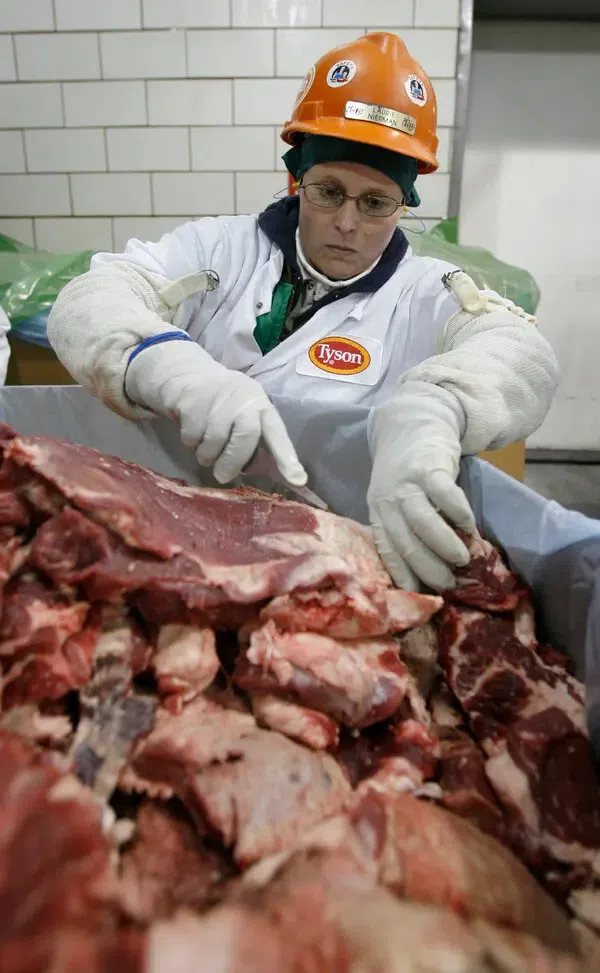
Waves of change are already moving through central Nebraska following Tyson Foods’ unexpected announcement that its Lexington beef plant — in operation since 1990 — will shut down on January 20th. The plant employs more than 3,200 people, and the impact of the closure is quickly spreading across the region.
One of the first ripples reached the newly opened Sustainable Beef plant in North Platte. CEO David Briggs said that within 24 hours of Tyson’s announcement, more than 100 Tyson workers drove to North Platte seeking employment. Sustainable Beef, which had originally planned to cap its workforce at around 950 employees, now says it may scale slightly higher and may even add a Saturday shift to keep up with increased cattle supply and interest. The facility is currently processing about 1,200 head per day.
Local cattle producers say ranchers may not feel the immediate effects of the closure, but cattle feeders and processors certainly will. Drought and shifting herd numbers have reshaped the cattle industry in recent years, and losing one of the state’s largest packing plants creates added pressure. Producers like Rusty Kemp and Kirk Olson said the industry is experiencing another swing in the cattle cycle — and that “the best cure for high prices is high prices” as herds eventually rebuild. Olson noted that selling cattle will now mean higher freight costs and more dependence on packing plants in Grand Island, Schuyler, Dakota City, and Kansas.
Meanwhile, local and state leaders are mobilizing. State Sen. Teresa Ibach of Sumner said Lexington Public Schools and the Nebraska Department of Labor acted quickly to support affected families, especially with half of the school district’s students having at least one parent employed at Tyson. Job fairs involving Sustainable Beef, JBS Grand Island, and Gibbon Pack were held almost immediately after the announcement.
The closure also raises state-level questions. Nebraska lawmakers are preparing for major budget challenges in January, and the loss of thousands of jobs could add pressure. The situation has revived decades-long debates over economic incentive programs — the same type of incentives that helped Lexington recover in the 1980s when the former Sperry New Holland factory closed before the site was converted into the IBP (later Tyson) beef plant.
Still, leaders such as Ibach and Sen. Mike Jacobson say the incentives paid off for Lexington, pointing to three decades of economic growth, immigrant community development, and generational stability created by the plant’s presence.
For now, much remains uncertain — from the fate of Tyson’s massive facility to the long-term economic outlook in Dawson County. But local officials say they’re moving quickly, supporting displaced workers, and pressing Tyson to be “a motivated seller” as the region searches for its next chapter.










Comments